Hear the village’s story.
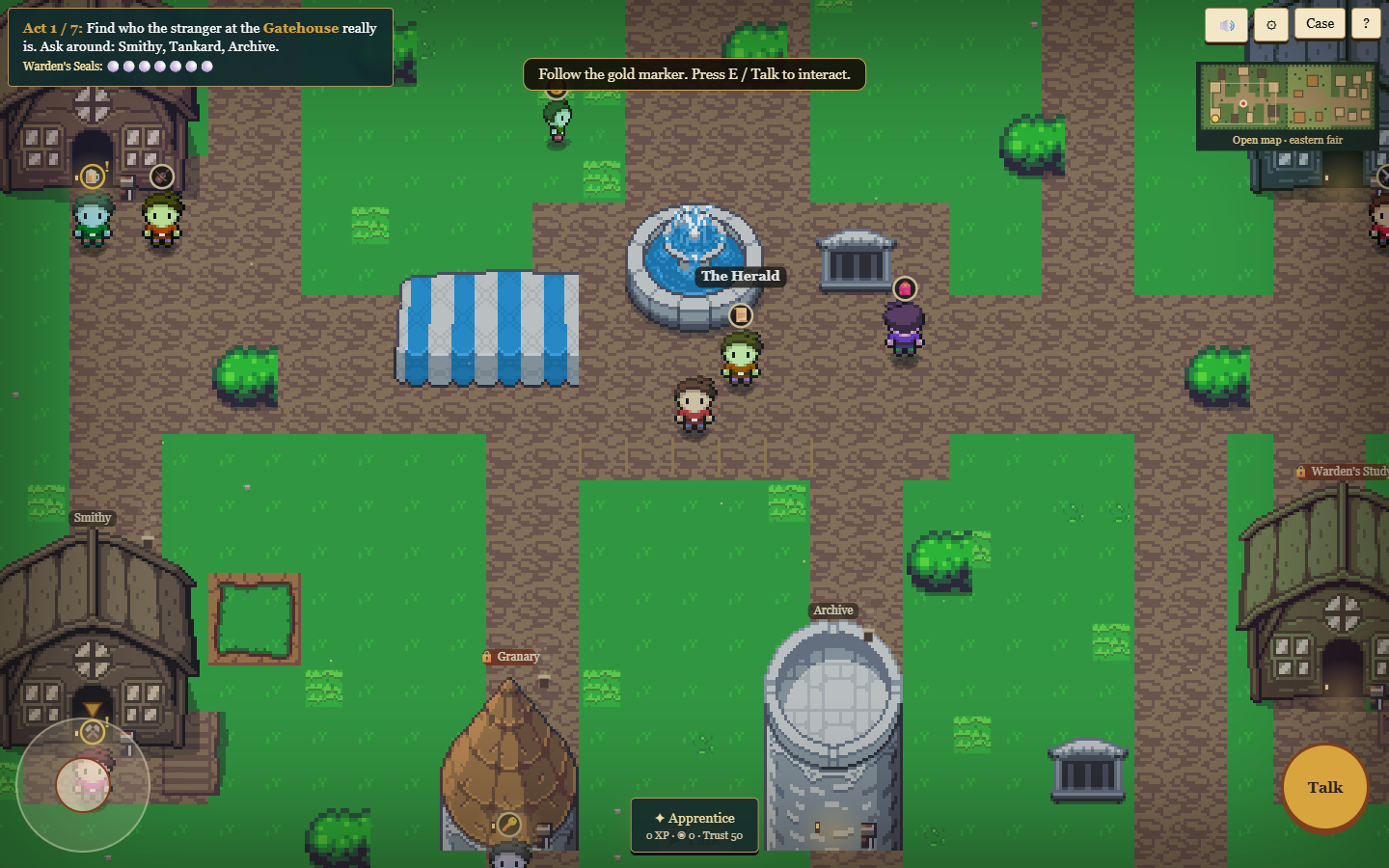
Talk to residents, inspect evidence, and use the atlas to follow your objective through the streets.
A medieval mystery that makes security thinking tangible. Explore the village. Follow the evidence. Decide who to trust.
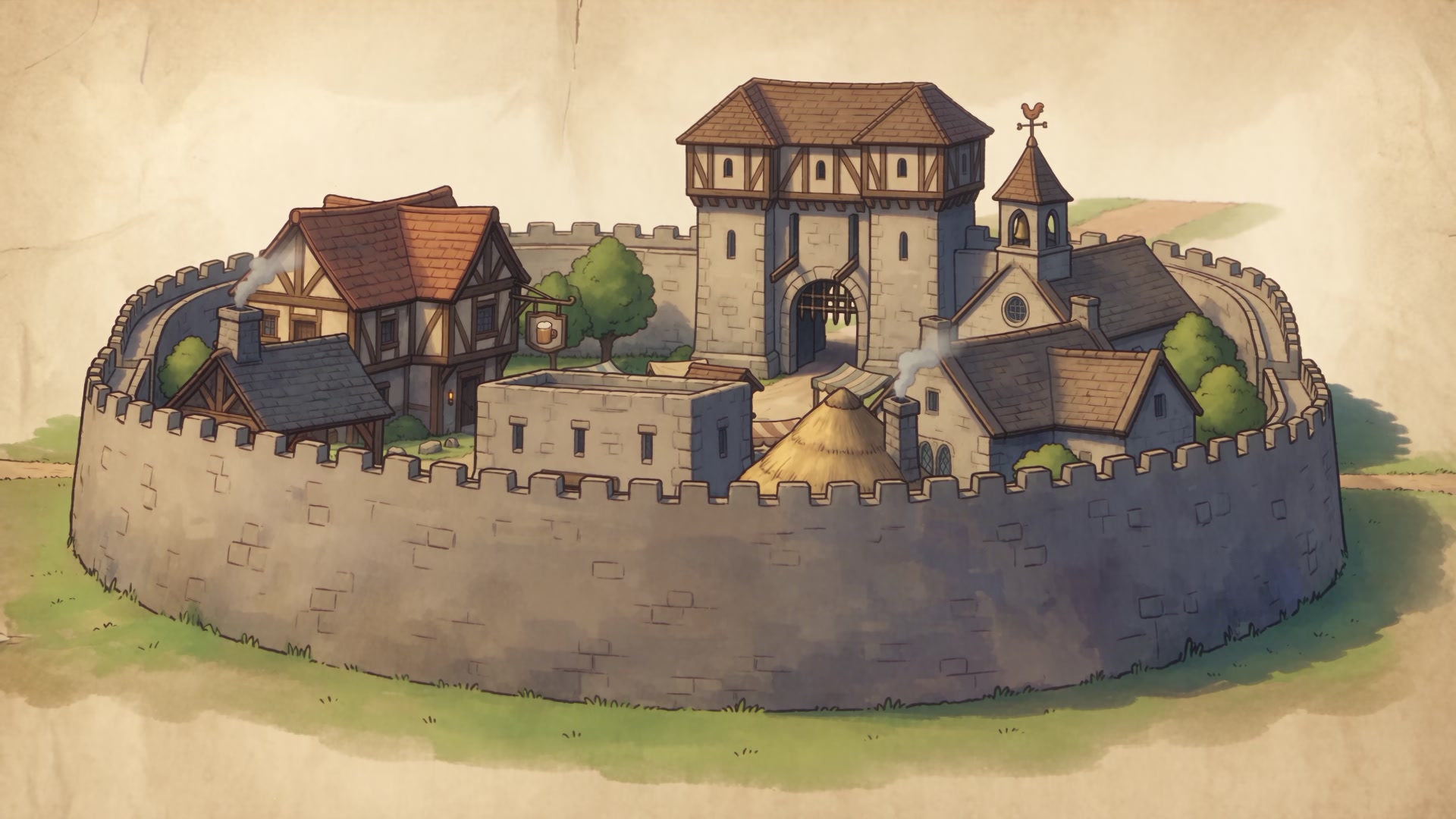
Security ideas become decisions you can explore: who to believe, what to protect, and how to check what changed.
Talk to residents, inspect evidence, and use the atlas to follow your objective through the streets.
Bring clues back to the Case board. Compare independent sources before making a decision.
Use feedback, reconsider an assumption, and explain what would change your mind.
Explore the Sealed Vault, Flooded Mine, and Crypt. Read enemy warnings, dodge, and counterattack. Victories have a 75% chance to add a hint.
Visit the East Ward for supplies, rest, and route notes. These side trips are optional; your main case is always the focus.
Real gameplay, English captions, and Benji narration. Watch at your own pace, then put the ideas into practice.
Movement, conversations, evidence, combat, hints, and returning safely to the village.
Open the learner guide →A focused university lesson with paired roles, evidence prompts, transfer, and a six-point exit ticket.
Open the teaching guide →Open the guides in your browser or download materials for preparation, projection, and reflection.
No. Open the game in a browser and choose New Game, or Continue for a saved journey. Keyboard and touch controls are available. The game and materials are in English.
Progress is saved in this browser on this website. Return with the same browser and address. Clearing site data or using a different device does not carry that save with you. The new /play address uses the same site storage as the previous homepage.
No. Choose No on the research prompt and you can still play. Optional CSV export requires logging and is per browser. There is no teacher dashboard, class roster, or automatic gradebook.
No. The first lesson focuses on one identity case and a justified explanation. Dungeons and town jobs are extensions. Do not assess combat speed or random hint drops; use the included exit ticket.
The seven cases introduce identity verification, secrecy, access, information leakage, forged messages, integrity, and recovery. Use the classroom discussion to connect the village analogy to a new setting and consider its limits.
Leave with a reason for what you believe.
Play Cipherfell ↗